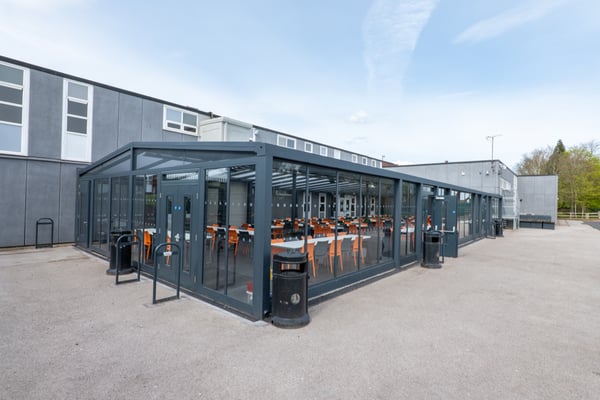
.jpg?width=800&height=500&name=Brunts%20Academy%20dining%20canopy%20(9).jpg)


Did you know that many parts of the UK are windier than mainland Europe?
This is because our island lies in the path of prevailing south westerly winds blowing across the Atlantic.
As such, wind uplift from strong winds is at the top of the list for reasons as to why school canopies can fail, alongside poor design and installation and low grade, cheap materials and poor maintenance.
Wind uplift
During strong winds, especially in coastal areas and during storms, an open-sided structure with a large flat roof can create a ‘sail effect’ underneath.
Cantilever canopies are particularly vulnerable, especially if made from a lightweight material like fibreglass.
However, wind uplift can be mitigated with correct structural design and proper installations and fixings.
It’s also vitally important that members - the individual load-bearing components that fit together to form the frame or skeleton of a building – are the correct size to handle tension and compression.
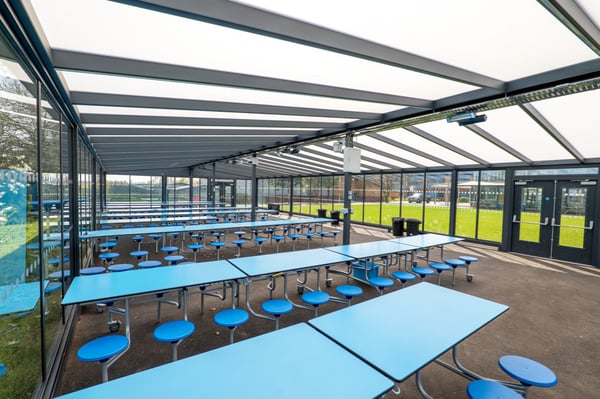
.jpg?width=1000&height=610&name=Royal%20Sutton%20School%20-%20dining%20canopy%20(4).jpg)
Poor structural design and under-engineering
Some canopies are often not designed to cope with real-world conditions.
Again, a canopy’s members must the correct size in order to handle tension and compression.
Yet with low-cost models, member sizes are reduced to the minimum to keep costs low but aren’t able to withstand UK weather conditions and storms.
Bad foundations
If the foundations aren’t built properly because the installer is trying to keep costs low, then canopies can be off to a shaky start.
Small and/or incorrectly sized and poured foundations mean the canopy is vulnerable to movement, which weakens the connections and makes it more likely to be damaged.
You may not notice until the movement causes damage and needs expensive repairs.
.jpg?width=1000&height=667&name=Brunts%20Academy%20dining%20canopy%20(9).jpg)
Corrosion and long-term deterioration
Poor installation and low-grade materials are often the culprits here.
Corrosion and long-term deterioration particularly affects steel canopies and poorly maintained timber canopies.
Thin protective coatings are easily damaged causing the steel to be exposed to the air and rust, weakening the structure overall.
If you have a timber canopy, then it must be regularly maintained and protected with stain or sealant to stop it weathering and deteriorating due to weather exposure.
However, an aluminium canopy won’t be subject to this type of deterioration because it’s non-corrosive and doesn’t react to its environment.
Installation defects
If a canopy is poorly installed or has an incorrect fixing, then a canopy can fail.
This is why we check all our canopies thoroughly after installation to ensure everything has been done properly.
Leaky canopies
Leaky canopies can be a big problem if the installer uses poor quality roof sheets or carries out an incorrect installation.
In addition, gutters can become blocked or damaged unless checked and cleaned out regularly.
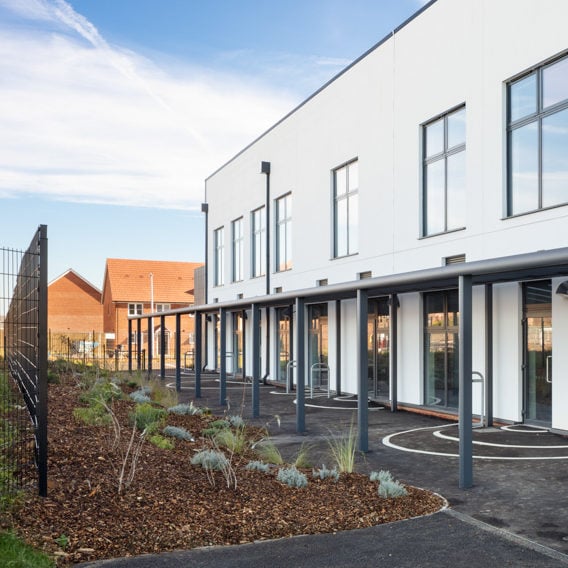
Warning signs
Warning signs include movement during wind, any cracking or damage to the coatings, rust staining and water ingress or leaks.
Also check for any visible signs of bending, sagging, or bowing on any parts of the canopy.
This is why it’s so important to keep up a maintenance regime to avoid any of these issues, particularly for timber or steel canopies.
Trusted installer
If you’re looking to install a canopy at your school it’s best to speak to your network for a trusted supplier.
Our experts at Kensington Systems have many years of experience of installing different types of canopies in schools across the country, as our case studies demonstrate.
If you’d like to find out more about installing a canopy, contact us.

.jpg?width=600&height=400&name=Spaceshade%20Lux%20with%20Enclosashade%20(Blinds%20up).jpg)