.jpg?width=800&height=500&name=Briarwood%20School%20canopy%20(4).jpg)


A growing body of evidence is showing outdoor spaces in SEND environments improve children’s attention, engagement, and wellbeing while lowering stress levels.
To reflect this wealth of research, the government now wants to see more outdoor places, partially shaded, created to play a therapeutic and learning environment for SEND pupils in its recently published White Paper: Every Child Achieving and Thriving.
These can take the form of outdoor classrooms, play areas with multisensory areas and those containing nature such as grass, trees and gardens, as well as partially shaded areas to protect students from the rain and sun.
Improved behaviour and a positive attitude
The Impact Of Outdoor Learning On Social And Cognitive Development In Special Needs Education examined a number of studies.
The authors concluded the studies provide compelling evidence that outdoor learning promotes a more inclusive learning environment compared to traditional indoor learning environments.
They found that outdoor learning enhances children’s academic performance, social communication, and wellbeing; and accessible and inclusive opportunities for outdoor learning are essential for children with SEND to experience these benefits.
In one of the studies featured in the research - a two-year garden intervention programme for children with disruptive behaviour disorder - the schools saw an increase in pass rates, positive attitude and lower dropout rates.
Improved concentration and less disruption
In another study, where students took part in an outdoor education programme, their attention span increased and their behaviour became less disruptive while maintaining comparable academic performance in science relative to a control group.
Students with disabilities were also seen to be more focused on educational tasks when working outdoors.
Reduced anxiety and increased social skills
The same review also looked at a study into children with ADHD which showed spending time doing activities in natural environments, compared to urban areas, can reduce ADHD symptoms like inattentiveness with lasting positive effects.
They concluded that natural environments offer a more inclusive educational approach for children with SEND by reducing and containing anxiety and enhancing social skills through activities and teamwork.
Children with Autism Spectrum Condition (ASC)
Researchers have also identified benefits of outdoor learning for children with Autism Spectrum Condition (ASC) and the need for adaptations to ensure accessibility.
Researchers conducted a five-month case study on the effects of using an outdoor classroom on two special education teachers and five autistic children and found children experienced increased verbal communication, reduced over-stimulation and improved focus on tasks, all contributing to progress towards their Individual Education Plan (IEP) goals.
Benefits are especially seen where children have some control over the sensory environments and play equipment, according to a study The use of Multi-Sensory Environments with autistic children: Exploring the effect of having control of sensory changes.
Researchers showed giving autistic children control of the multi-sensory environment reduced their repetitive motor behaviours, sensory behaviours, activity levels, stereotyped speech and vocalisations, and increased their attention.
Nature exposure and reduced anxiety
It’s no surprise that children with SEND show improvements to their behaviour if they are able to escape noisy classrooms for the quiet of nature, helping to calm them and regulate anxiety as well as boosting confidence in a non-academic environment.
Effect of nature on the mental health and well-being of children and adolescents: meta-review shows that children who spend more time in green spaces, such as wooded playgrounds or gardens, have better focus, lower stress levels and better emotional resilience.
A systematic review and meta-analysis, Nature-Based Interventions for Autistic Children, showed improved short-term sensory, social, and behavioural functioning outcomes among children with ASD.
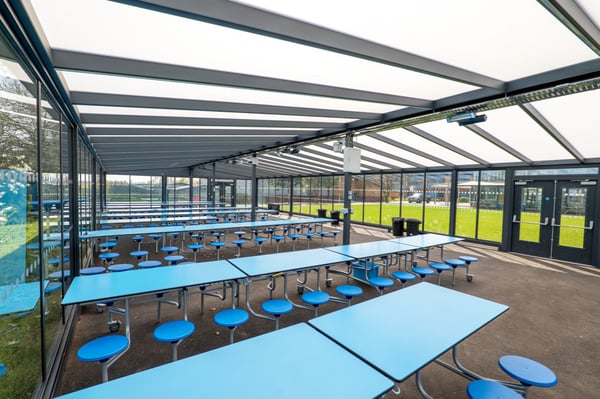
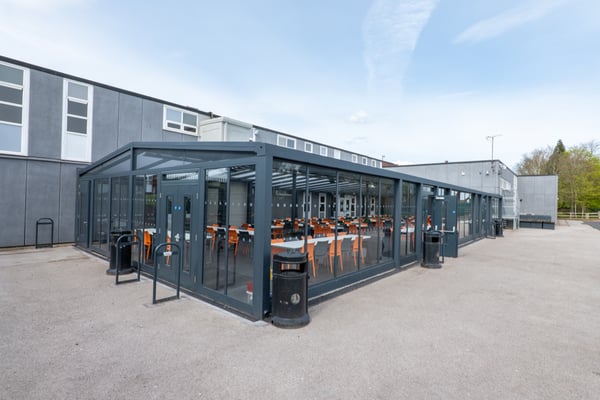
Canopies protect students from the rain and sun
Our Spaceshade canopies are very popular with schools across the country because they are quick to install and are highly durable and flexible in their uses.
They are perfect for outdoor classrooms and for covering play equipment and multisensory play areas as well as for extra dining and social space.
In addition, they can be covered in solar panels to help you cut energy bills and carbon and create a real time learning experience for pupils.
If you’d like to find out more, please contact us.

.jpg?width=600&height=400&name=Brunts%20Academy%20dining%20canopy%20(9).jpg)